What is the first constraint: wall, floor or ceiling?
The building decides the format before the content does. A glazed shopfront has no wall for a display; a listed lobby wall cannot be drilled; a low ceiling cannot take a hanging screen; a narrow aisle cannot spare a floor-standing base. Walk the site and mark what is structurally available.
If two formats are possible, compare them on viewing direction, service access and content ownership. A wall-mounted screen is easy to service but only faces one direction; a hanging screen reaches two directions but is harder to reach; a floor-standing screen is movable but consumes floor space.
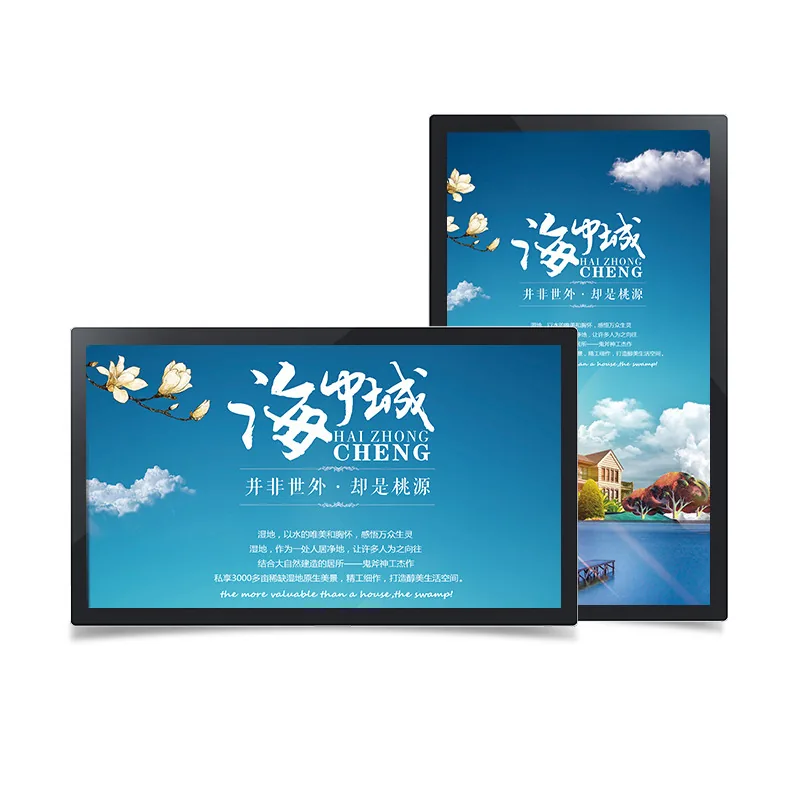
When is a wall-mounted display the right choice?
Wall-mounted is the default when there is a solid, flat wall at the right height and the audience approaches from one side. It uses no floor space, keeps cables short and is the easiest format to service. The main constraints are wall construction, mounting height and the distance from the nearest power point.
For a recessed installation, the wall cavity must provide depth for the panel, bracket and ventilation. Do not seal a display into a closed cavity. A removable front panel or a front-service bracket makes future replacement possible without demolishing the joinery.
- Best for: lobbies, meeting-room doors, retail walls, menu boards.
- Watch: wall load, VESA pattern, recess depth, cable route.
- Service: easy if the bracket allows lifting or tilting.
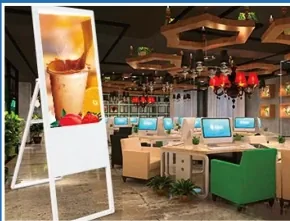
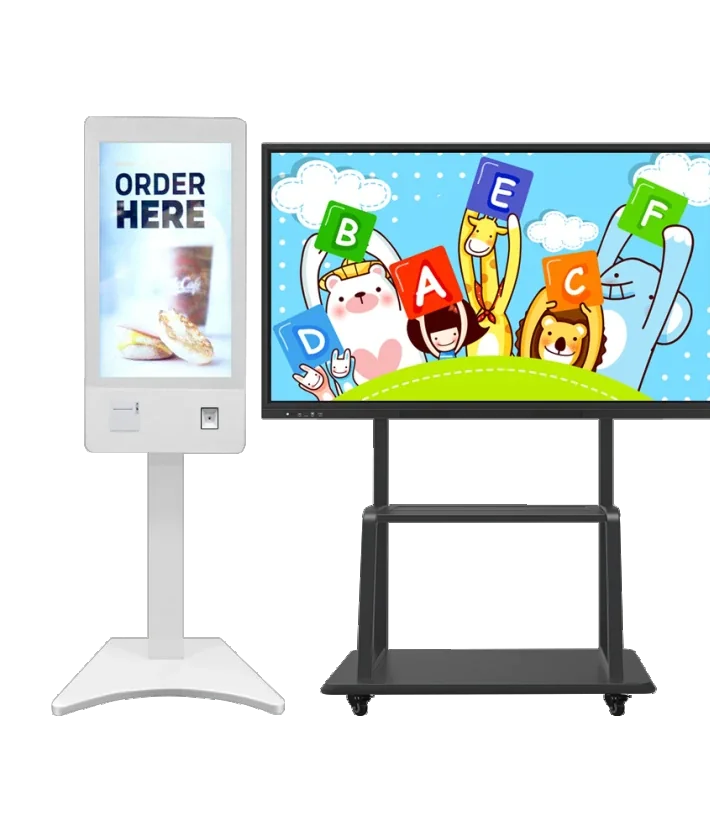
When should I use a floor-standing display?
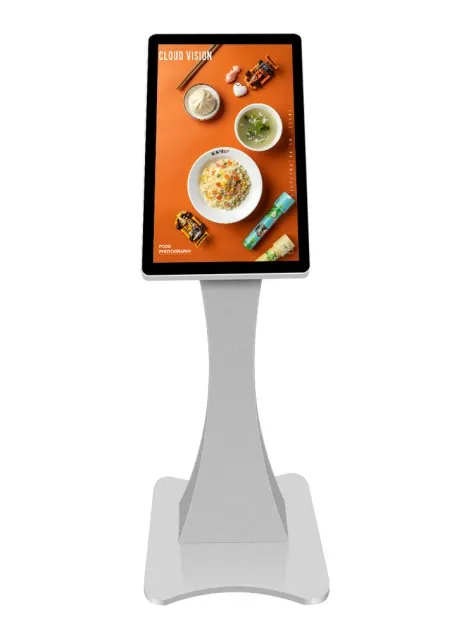
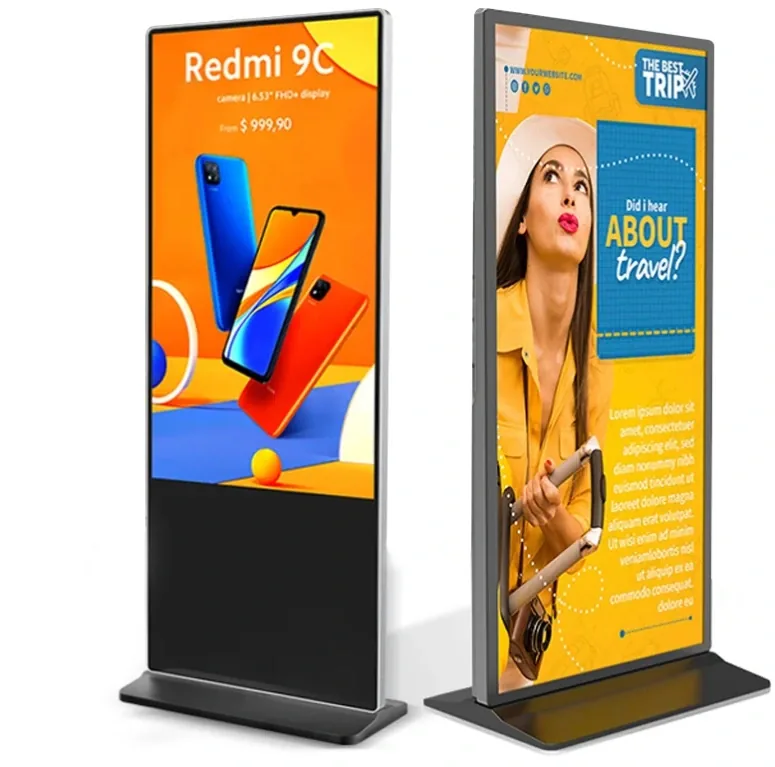
Use a floor stand when the wall is unavailable, glazed, listed or too far from the audience. A freestanding unit can be placed at the entrance, beside a product plinth or in the middle of a showroom. It can also be moved when the floor plan changes.
The trade-off is floor space and stability. Confirm the base footprint, the weight and the anti-tip fixing. In public areas, anchor the unit to the floor or wall; a tall unit on a smooth floor can be pushed or tipped. Check that the power and network points can reach the new position before moving it.
- Best for: entrances, aisles, showrooms, exhibition halls.
- Watch: base footprint, anti-tip fixing, power route.
- Service: player access is usually at the rear or base.
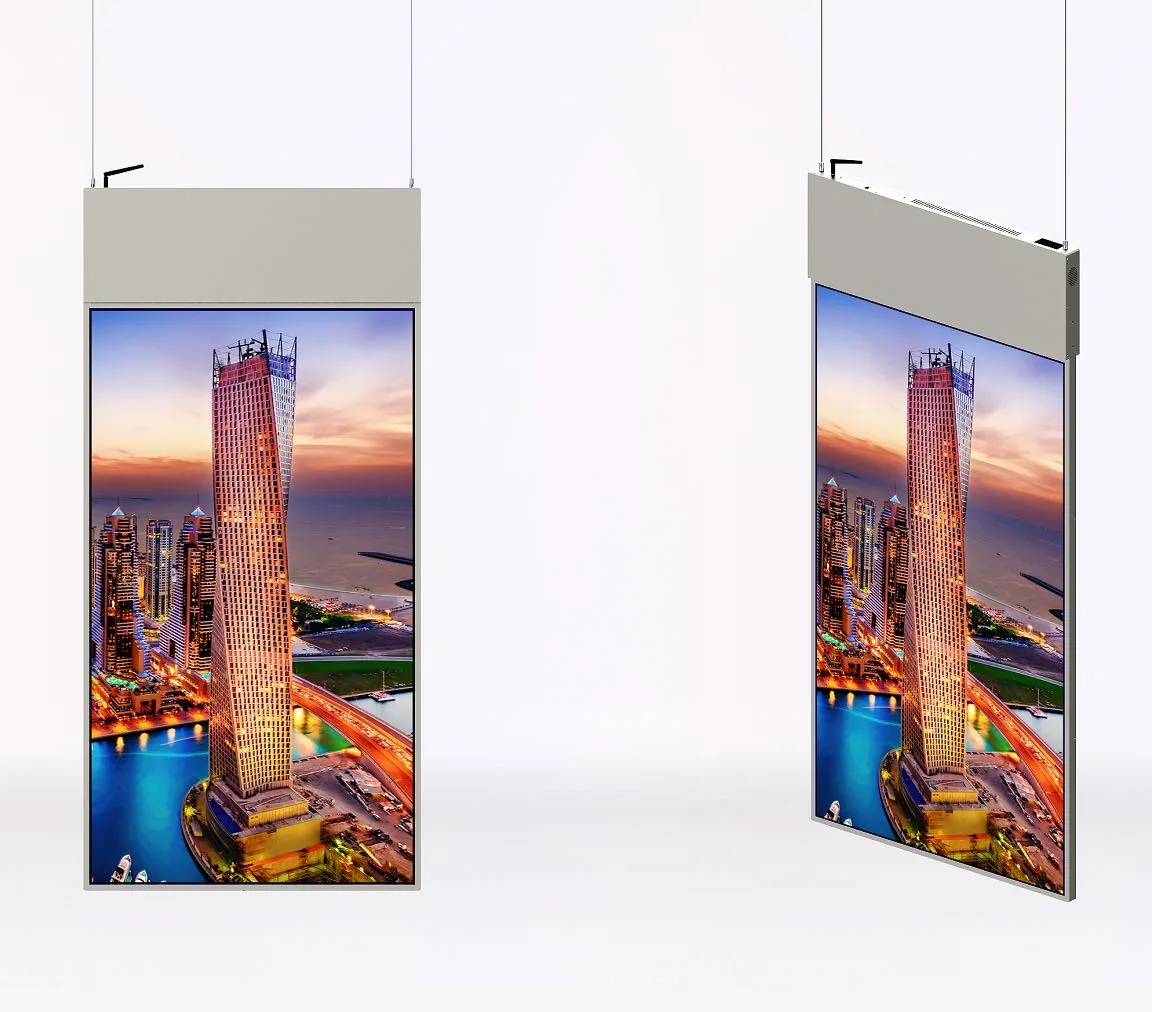
When does a hanging display solve the problem?
A hanging display uses the ceiling, so it can serve a glazed window, a supermarket aisle or a corridor where both directions matter. A double-sided unit shows the same campaign to viewers approaching from either side, using one suspension point.
The hidden cost is access. A hanging screen is harder to reach for service, so specify a lowering or tilting system. The suspension must anchor to a structural ceiling, not to a suspended ceiling grid. Confirm the ceiling height, the anchor type and the weight before ordering.
- Best for: shop windows, aisles, bank branches, hotel lobbies, concourses.
- Watch: structural ceiling, suspension length, service method.
- Service: plan a lowering system before installation.
How do the three formats compare?
The table compares the formats on the constraints that most often decide the project: mounting surface, floor use, viewing directions, service access and typical models in our range.
| Format | Mounting | Viewing directions | Floor use | Service | Range examples |
|---|---|---|---|---|---|
| Wall-mounted | Wall / recess | One | None | Easy | SD-G series, MG-AD500/550, SS-430WD |
| Floor-standing | Freestanding base | One or two (double-sided) | Yes | Moderate | SD-L series, MG-LD550 |
| Hanging | Structural ceiling | One or two (double-sided) | None | Harder | SD-GD series, SD-G550 |
What installation details decide the format?
Power and network are the practical limits. A wall-mounted unit can use a nearby socket and a short network drop; a floor-standing unit needs a route through the base; a hanging unit needs the cable to run through the suspension rod or a ceiling void. If the cable cannot be concealed, the installation will look temporary.
Service access should be designed at the same time. For a wall unit, leave enough clearance to lift the panel off the bracket. For a floor unit, leave access to the player compartment. For a hanging unit, specify a lowering system or a safe working platform. A display that cannot be serviced will be replaced late and at higher cost.
What about outdoor and window positions?
A window position is not the same as an indoor wall. Sunlight through glass can be stronger than a shaded outdoor wall, and the display may be visible from outside at night. Use a high-brightness panel and check the reflection at the actual viewing angle.
A fully outdoor position needs an IP-rated enclosure, cooling and surge protection. Do not put an indoor panel in a sealed outdoor box without a thermal design. The heat build-up will shorten the panel life even if the enclosure keeps the rain out.
Which format should I choose for a retail store?
For a store, start with the window. If the window has a solid wall and the display faces inward, a wall-mounted high-brightness screen is the simplest choice. If the window is fully glazed, a hanging double-sided display uses the ceiling and serves both the street and the shop floor. If the window is protected or the landlord does not allow drilling, use a floor-standing unit inside the entrance.
Then add in-store screens where the customer stops: the promotion wall, the service counter and the shelf edge. Use one format family where possible so the content templates and the spare parts are shared.
- Solid window wall → high-brightness wall-mounted.
- Fully glazed window → double-sided hanging.
- Protected wall / no drilling → floor-standing inside the entrance.
- Shelf edge → stretched bar display.