Why is an outdoor display an environmental engineering problem?
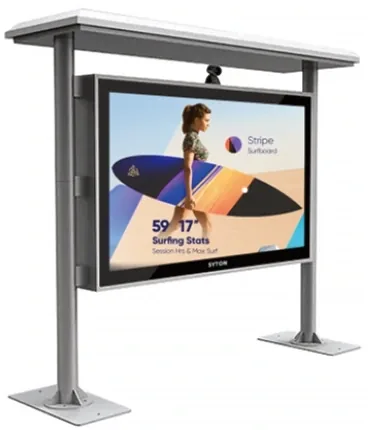
An outdoor display must survive sun, rain, dust, temperature swings, vibration and power quality. The panel is only one part of the system. The enclosure, gaskets, cooling, cable entry and mounting determine whether the panel reaches its rated life.
A common failure is an indoor panel placed in a sealed outdoor box. The box keeps the rain out but traps heat, and the panel fails in the first hot season. Outdoor specification starts with the thermal and moisture path, not with the screen size.
How bright does an outdoor display need to be?
Brightness must overcome reflected sunlight, so the required value depends on the surface, the orientation and the content. A white full-screen advertisement is the hardest case; a dark information board with light text is easier. Specify the worst-case content, not the average content.
A light sensor is not a substitute for adequate peak brightness. It reduces brightness at night to save power and reduce glare, but it cannot make a 700 cd/m² panel readable in direct sun. Match the panel to the daytime condition first.
| Exposure | Starting brightness | Enclosure note |
|---|---|---|
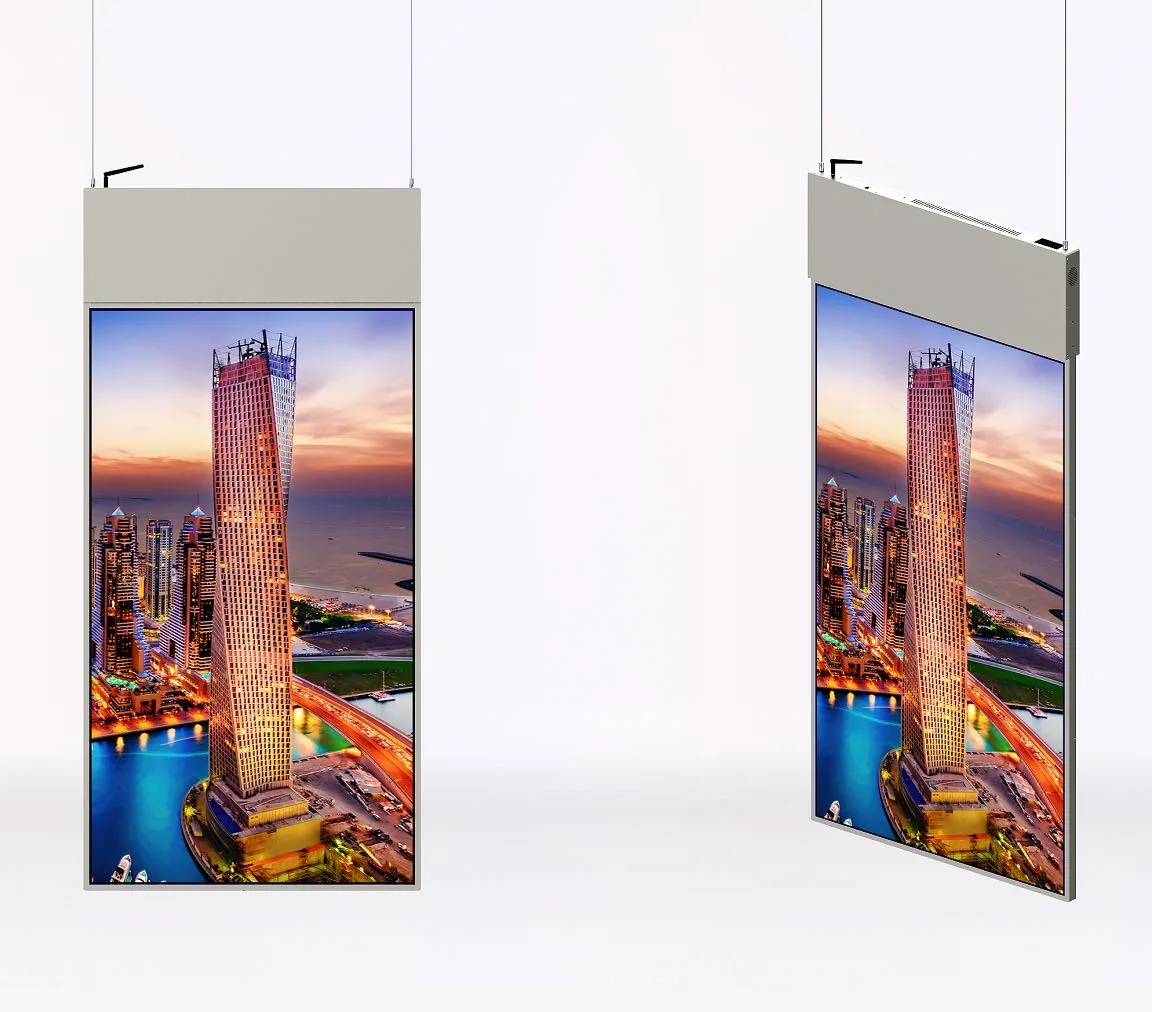
| Indoor window, indirect sun | 700–1,000 cd/m² | High-bright indoor panel; check reflection |
| Covered outdoor, no direct sun | 1,500–2,000 cd/m² | IP-rated cabinet, fan cooling may suffice |
| Direct sun, partial day | 2,500–3,000 cd/m² | IP55/IP65, fan or air conditioner |
| Direct sun, most of the day | 3,000–3,500 cd/m² | Air-conditioned cabinet, high-contrast panel |
| Covered poster position | 350–700 cd/m² | IP65 poster format, not direct sun |
What does IP55 or IP65 actually protect?
The IP code has two digits. The first digit is solids (dust), the second is liquids (water). IP55 means limited dust ingress and protection against water jets; IP65 means dust-tight and protection against higher-pressure water jets. Neither rating covers submersion, condensation or a leaking pipe above the cabinet.
The installation matters as much as the rating. Cable glands must be sealed, the door gasket must be clean, and the cabinet must drain if water enters. A cabinet with a missing gland or a damaged gasket is not IP65 in service, whatever the label says.
| Rating | Dust | Water | Typical use |
|---|---|---|---|
| IP55 | Limited ingress | Water jets, limited pressure | Covered outdoor, street furniture |
| IP65 | Dust-tight | Higher-pressure water jets | Exposed street, transit, façade |
| Not stated | Unknown | Unknown | Do not assume outdoor protection |
Fan or air conditioner: which cooling method?
A fan moves filtered ambient air through the cabinet. It is cheaper and uses less power, but it only works when the ambient air is cooler than the target internal temperature. In a hot, sun-exposed location, a fan pulls hot air in and may not keep the panel within its operating range.
An air conditioner actively removes heat and can hold a stable internal temperature, but it costs more, uses more power and needs condensate management. The choice should follow a temperature measurement at the actual location, not a generic rule.
| Method | Best for | Watch |
|---|---|---|
| Fan | Cooler, shaded sites with good air exchange | Filter cleaning, hot-air intake, dust |
| Air conditioner | Hot climates, direct sun, high internal load | Power, condensate, service access |
| Passive / heatsink | Low-power displays in mild climates | Limited heat removal, direct sun |
How do I protect power and network?
Outdoor cabinets are exposed to surges from lightning, switching and nearby equipment. Use a dedicated circuit, a surge protective device at the distribution board and a second protector at the cabinet if the cable run is long. Confirm the earthing with the site electrician.
For network, use fibre or a shielded cable with surge protection, or a 4G router. A long outdoor copper Ethernet run is both a surge path and a maintenance risk. Keep a local copy of the current campaign so the screen keeps playing if the network drops.
What content works on an outdoor screen?
Outdoor content needs high contrast, large type and a short message. White backgrounds demand the most brightness; dark backgrounds with light text are more forgiving. Avoid fine print, thin lines and fast animation that cannot be read while walking.
Design at the native aspect ratio of the screen, keep critical text inside the safe area, and test the content at the actual viewing distance at the same time of day as the campaign. A design that looks good on a desktop monitor may disappear in sunlight.
What should the site survey capture?
A useful outdoor site survey records the orientation, the hours of direct sun, the mounting surface, the power source, the network path, the flood risk, the pedestrian or vehicle clearance, and the maintenance access. Photographs at midday and late afternoon show the real light conditions.
- Compass orientation and hours of direct sun.
- Mounting surface and structural anchor points.
- Power source, earthing and surge path.
- Network route or 4G signal strength.
- Flood, drainage and service access.
How do I maintain an outdoor cabinet?
Plan quarterly checks: gaskets, cable glands, fan filters, air-conditioner condensate, brightness sensor, mounting bolts and the cabinet interior for moisture. After a heavy storm, inspect the cabinet before restarting the campaign.
Keep a spare player and a spare panel for critical locations. Record the maintenance access method in the site file so a substitute technician can service the unit without disassembling the surround.